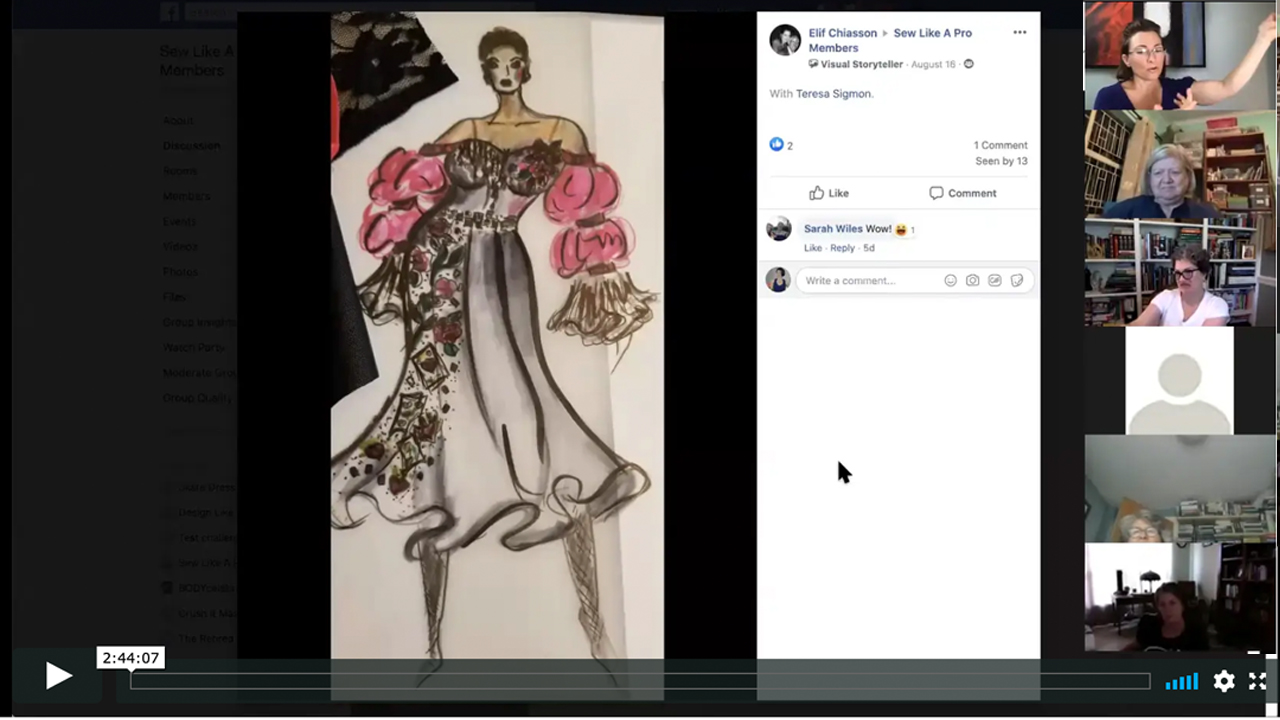
.
tags: poof sleeves, lycra ballgown skirt, cut lace motifs with wood burning tool, armbands, detachable skirt, double layer leotard, side zipper, sleeve cutouts, keyhole sleeves, godets seam allowance, shorten dress, front neckline too wide, types of mesh
Join our new design-based Facebook group.
It’s a public group dedicated to general design tips and techniques for all styles of Country, Ballroom, Ice and Roller Skating.

MEMBER Qs + PHOTOS
ELIF C.
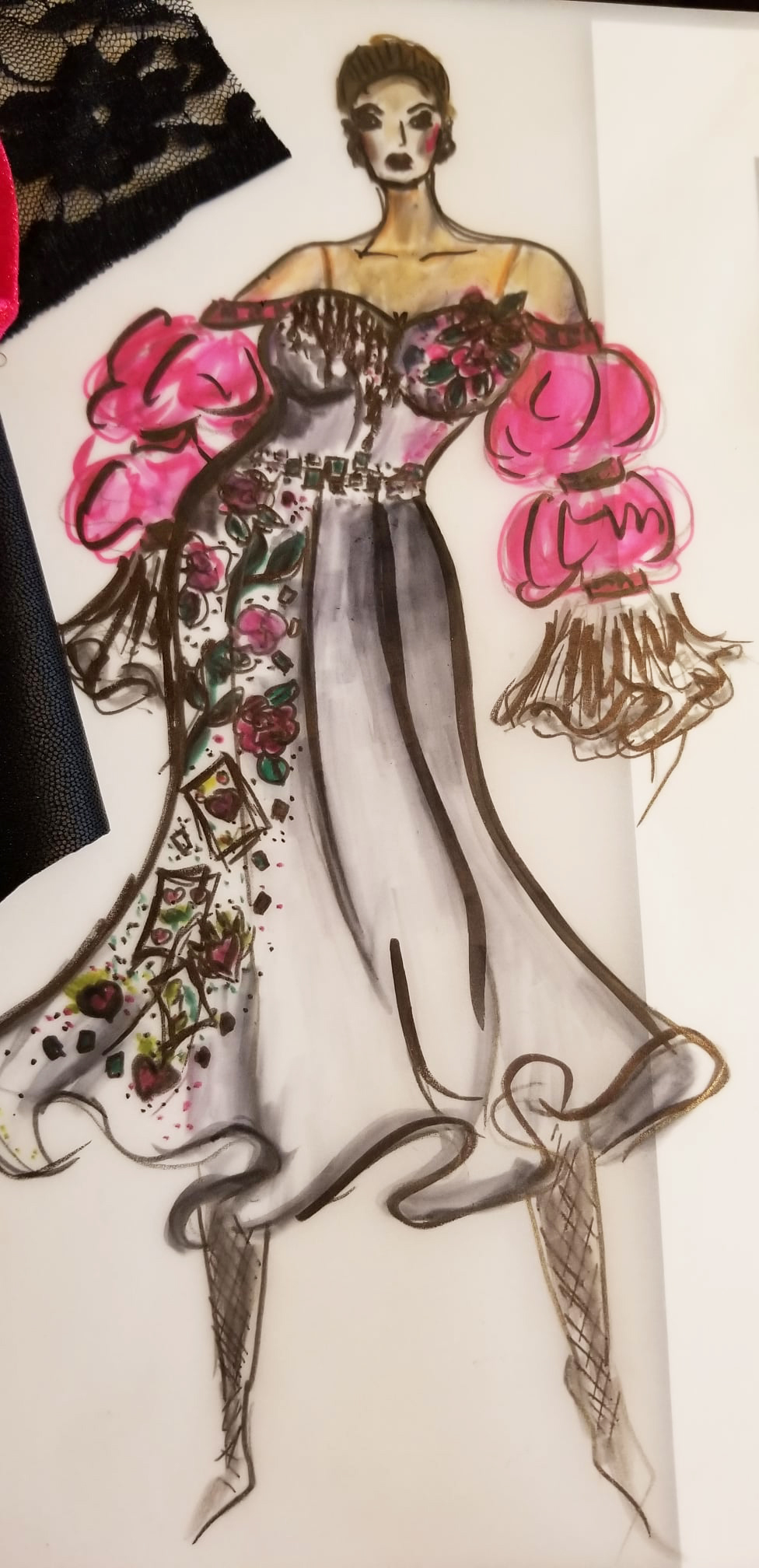
I am working on the bishop sleeves for my new dress, and I cut them extra long because I want to gather them in two places on the arm. However, I only want to gather the sleeves on the top and not the bottom. How do I do that? Also, how many panels should the skirt be?
(4:44-52:38)
T's answer:
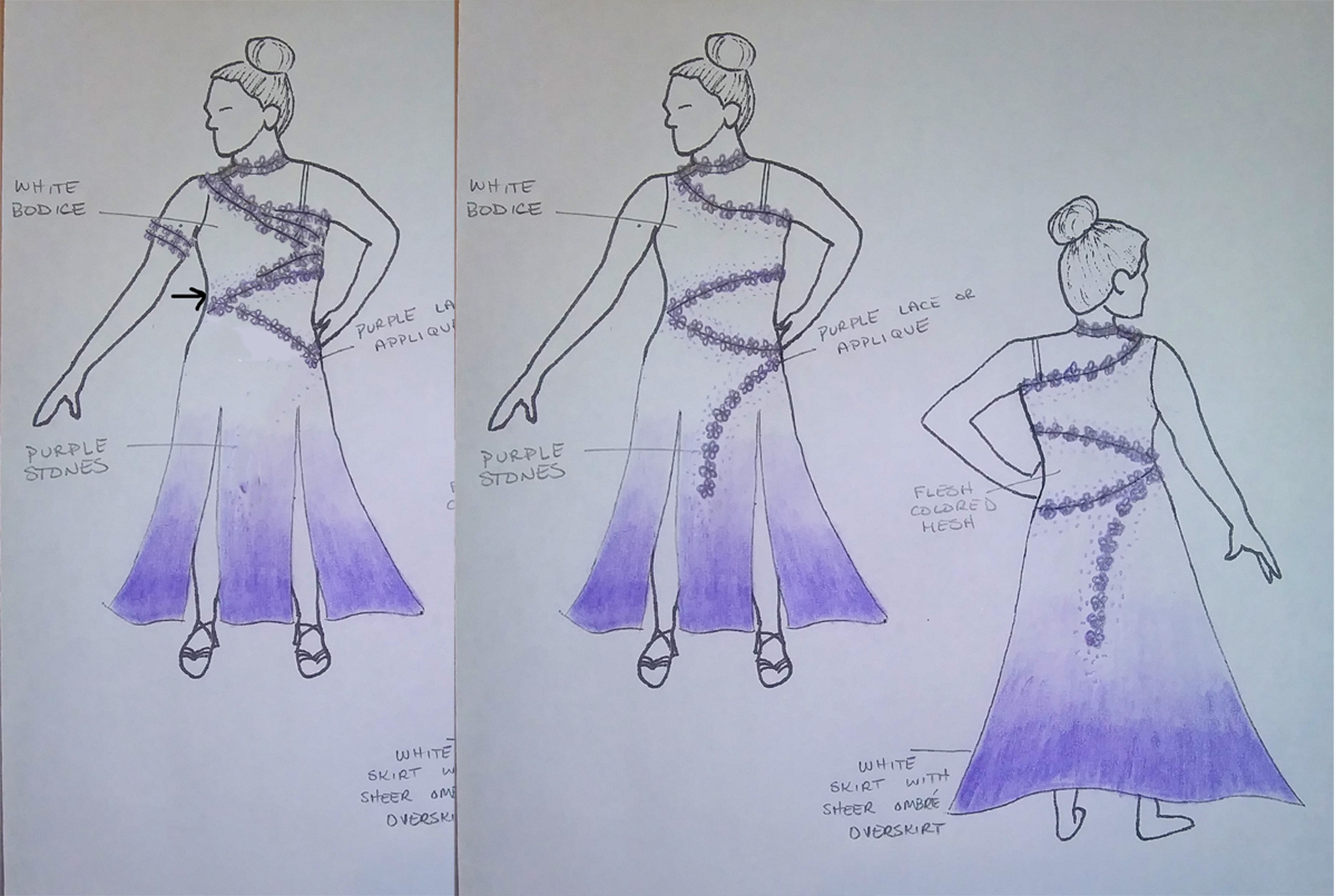
Your sleeves are not really a Bishop. You have two poofs and a ruffle attached to armbands 😉 The upper poof can be attached to a very short off-the-shoulder sleeve to help stabilize it.Listen to the video for a fun discussion on how to achieve Elif's amazing sketch!
For those of you who want more information on Bishop sleeves, watch the January 15 Q&A replay for a discussion with Candice about her ballgown.
If your skirt is made out of a stretch fabric, make it only 4 panels, because it will be very heavy. Just flute it a lot. You could also make the skirt detachable with a zipper, and hide the attachment at the decorated waistband. Follow the instructions for cutting skirts with stretch fabrics in the CBG program.
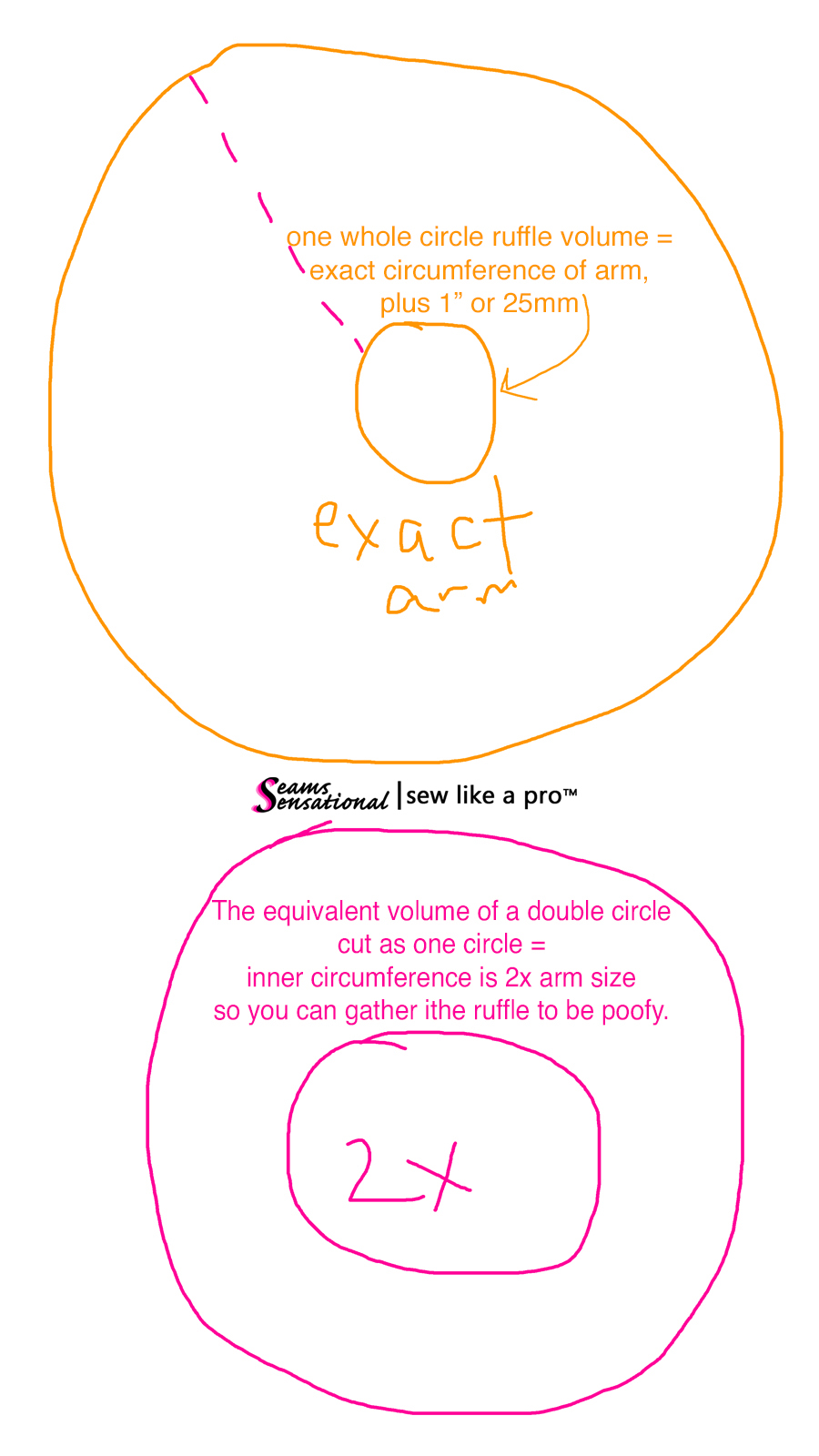
- Options for how full to make the ruffle closest to the hand.
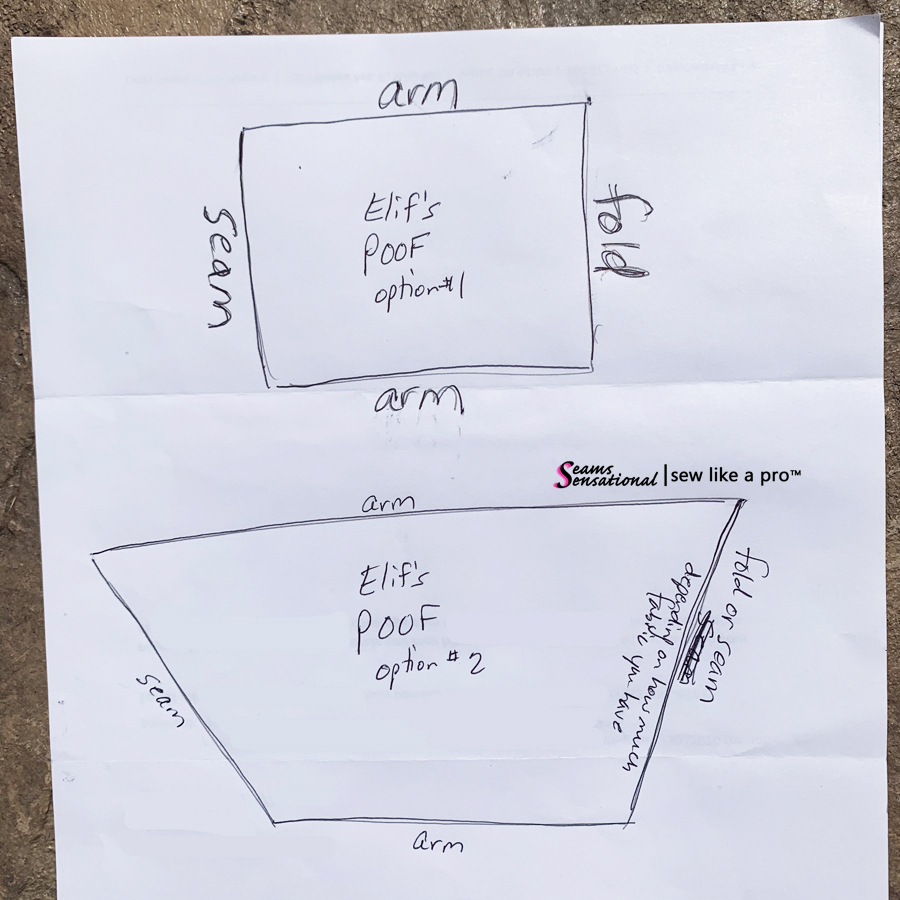
- Patterns for making the “poof”.
.
ASTRID S.
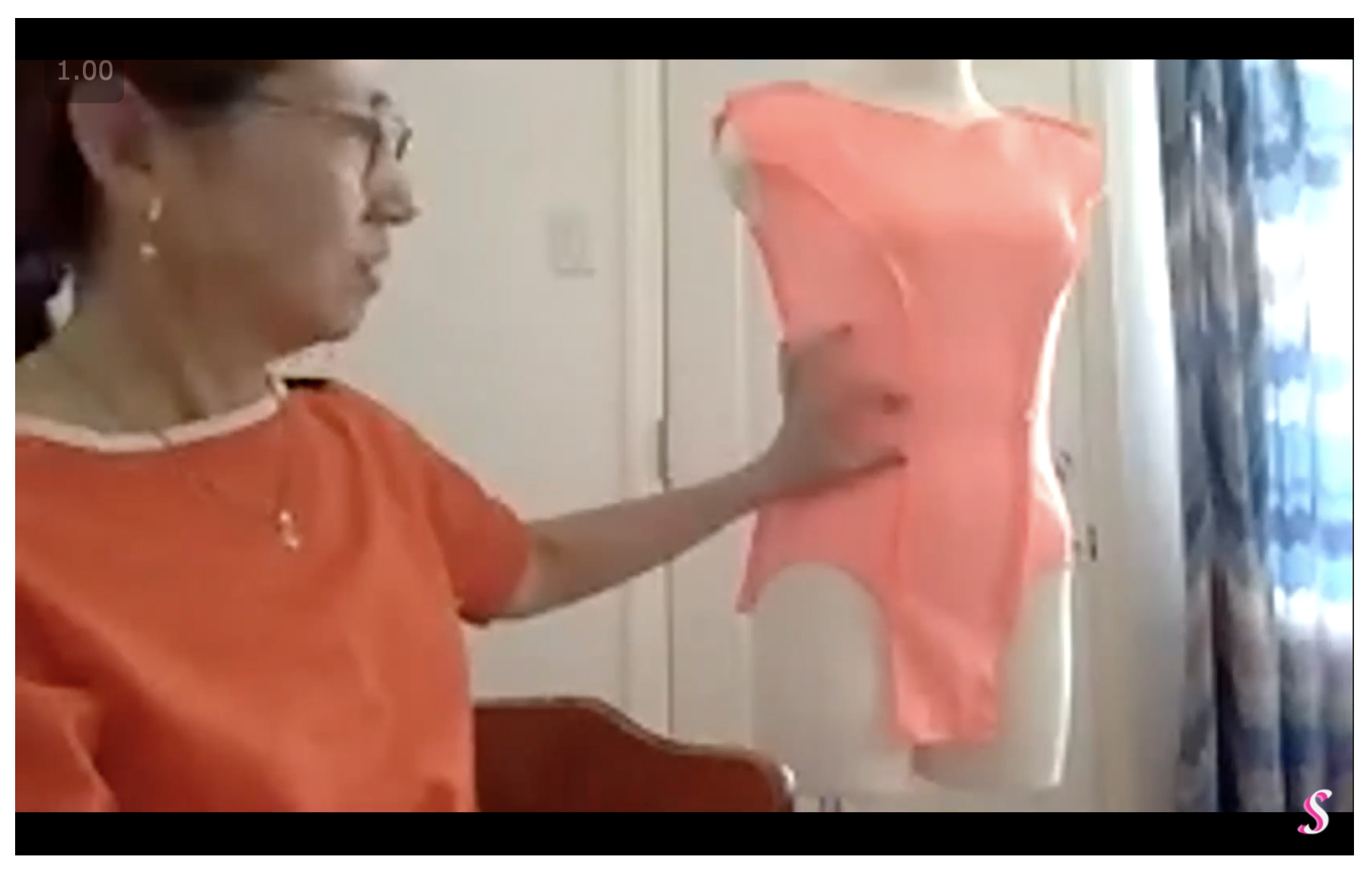
I started a new leotard. I originally planned to make it a single layer leotard, but then decided to do a double layer leotard so that it would be more snug. It fits well, but it is too short now.
(52:40-1:06:44)
T's answer:
Doing a double layer leotard does make the leotard shorter, but it should not be drastically shorter, so you probably measured the leotard a little short as well. Please send me pictures of your measurement card, pattern, and a picture of you wearing the leotard. Watch the videos about fitting a single layer vs. double layer leotard in module 4. Also, if your dress form is thinner than you, then the leotard will be longer on the dress form than it is on your body.
You have several options to fix your leotard:
1) Remove one layer of lycra and return the leotard to a single layer leotard. (If the fabric is thin, light-colored, or doesn't offer enough support this may not be the best option.)
2) Remove some of the inside layer of the leotard and use it to make new trunks, then line the inside leotard with different fabric
3) If you don't have enough fabric for your skirt, you will need to order new fabric anyway, and you can make a new leotard or new trunks.
NOTE: I asked the group if adding fitting images comparing single and double layer fittings to the module 3 cutting page would be helpful. The general consensus was YES. Im the near future, I will add images from Lynn's comparison fitting videos featured in module.
YVONNE M.
(1:06:55-1:15:15)
T's answer:
Rip open the top of the skirt seam on the side where the zipper is. While your daughter is wearing the dress, do a quick baste attaching the skirt on either side of the zipper. so that it fits her perfectly. Then, before you stone the dress, redo the zipper and extend it into the skirt.
CATHY H.
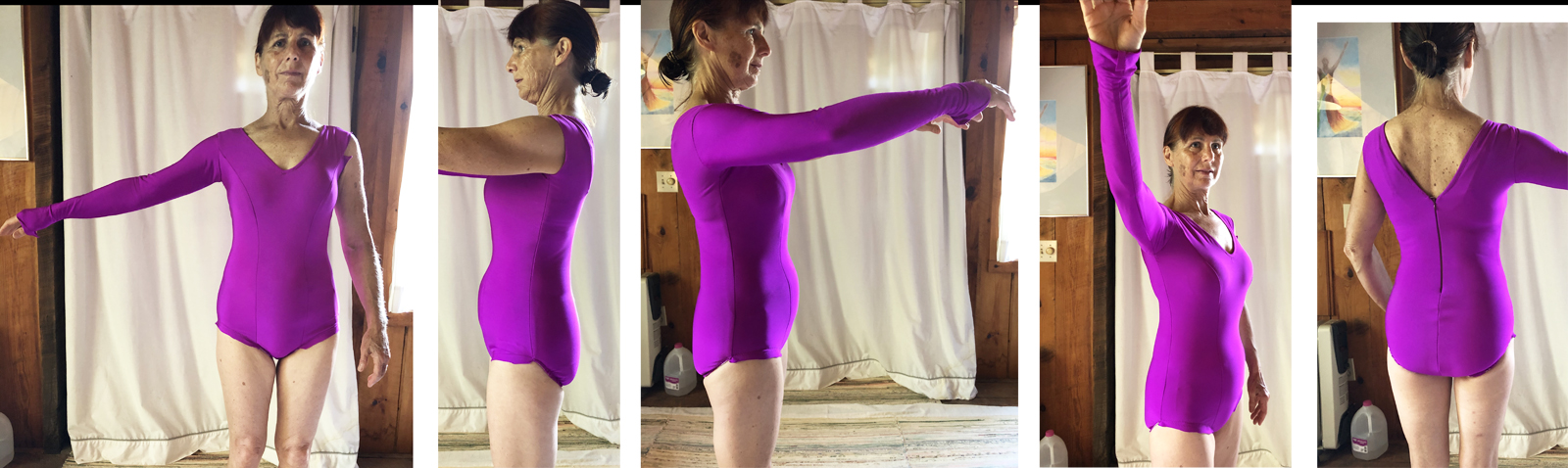
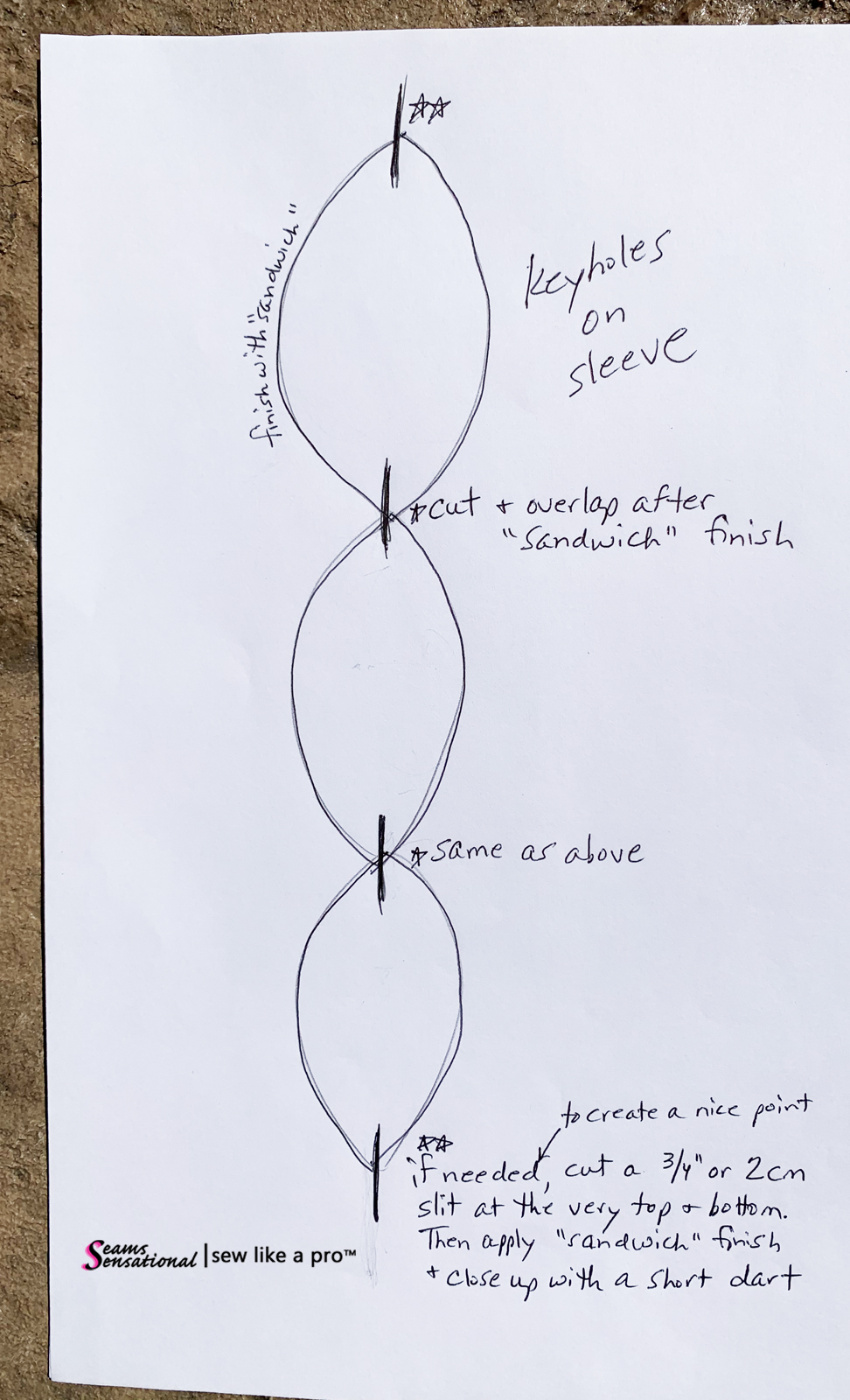
Hello, since the last Q&A the latest progress on my dress was putting in the 2nd leg elastic (have not flipped these yet) and sewing in the zipper. I also put in the neck elastics (I used 1/4”elastic and did stitch and flip technique). I also finished making the sleeve pattern, cutting it out, sewing it, fitting it on the dress form and myself, making some adjustments, fitting it on me again then basting it in. I would love your feedback on the fit- neckline, zipper and the sleeve. And how should I do the 3 sleeve cut outs as shown in my design? Then I’m thinking the next step is the skirt and attaching it.
(1:15:15-1:31:10)
T's answer:
The sleeve fits great!
To determine how large you want the keyhole cutouts:
- Put the leotard with the sleeve on. You will do a rough drawing with a fabric pencil or disappearing fabric marker.
- Draw a line down your arm through the center of where you want the cutouts to be. Make sure your arm is straight at your side, not up, out to side, forward or back.
- Mark the estimated size for each of the keyholes.
- Take off the leotard and sleeve.
- Mark all basting stitches where the sleeve is stitched to the leotard and then remove the sleeve.
- Lay the sleeve flat, and draw more refined versions of your cutouts. Use paper templates if you need.
- The keyholes get larger once they are cut. To help offset this, cut everything 1/2" or 13mm smaller than you want it.
KARIN W.
Hello, I'm still in the progress of designing, so to figure out how my design will work with my material, I need to know what a double lycra leotard means. Does it mean that I take two layers of lycra, cut all the different parts twice and then stitch them together?
(1:31:20-1:34:00)
T's Answer:
Correct! Module 3 in all the programs shows you how to cut and baste a single layer and a double layer leotard. Also, please see the PDF download in module 1 that tells you how much lycra is required to make a single layer leotard and a double layer leotard.
AMANDA J.
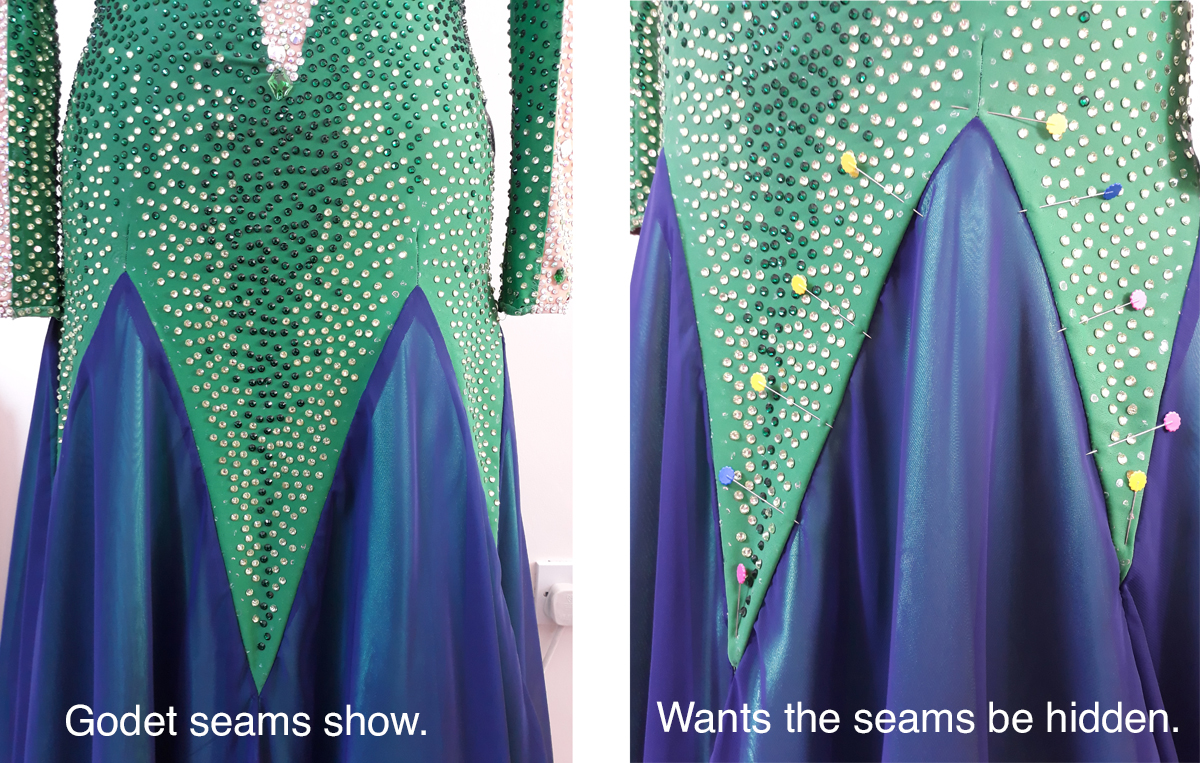
Hi Teresa, you advised me previously on how to attach godets to a dress I am altering where there are no seams at the points. I have now attached them using your instructions to make a small dart, which has worked really well.
As you can see from the first photo, the seam allowance is hanging down and is visible through the georgette and is probably more noticeable because of the green satin beneath it. I want the seam allowance to stay tucked behind the lycra as pinned in the second photo. What is the best way to secure it in place? Any stitches shouldn't be too visible after I've put the stones back on the edge.
(1:34:17-1:39:45)
T's answer:
Go in and steam press the seam allowance so they go towards the dress fabric. Then add a few dots of rhinestone glue or regular fabric glue along the top half or two-thirds of the godets to keep the seam allowance pressed back. A glue dot on the upper 2/3 of the V, about where your pins are should be perfect.
ANNETTE D.
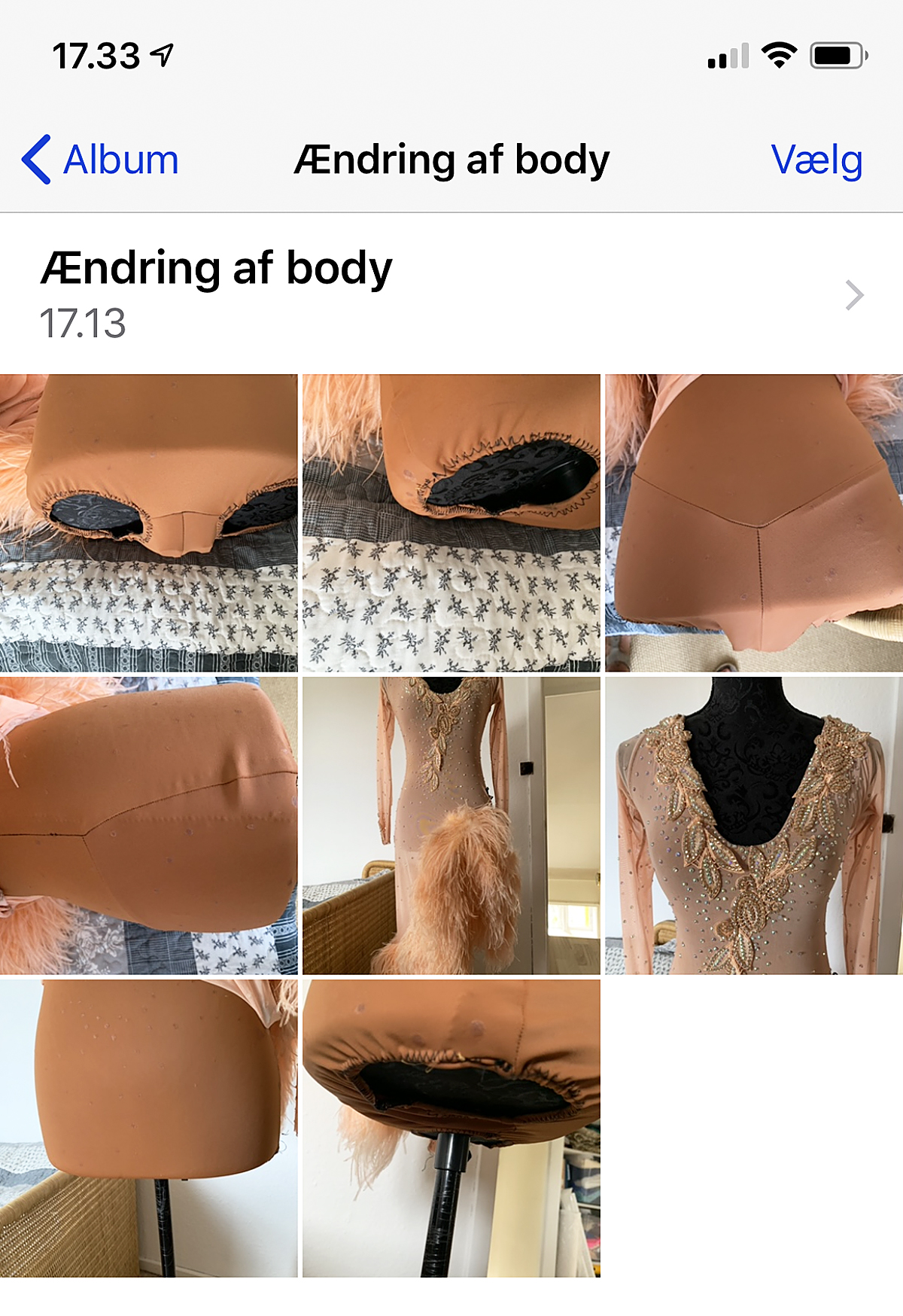
I have this used dress, which I did not make myself. The body is too long and I must make it shorter. It is very slim, and there must not be any visible seams. Also the front neckline is too deep.
Do you have a good advice about the ostrich boa? It loses the feathers.
(1:39:49-1:58:25)
T's answer:
1. Try the dress on. Safety pin all the excess length in the crotch. I do this with both Andrea in the Advanced Program and Liesl in the Basic Programs.
2. Rip open the crotch and remove the elastic to reshape the trunks.
3. Then line up the Sew Like a Pro pattern on the bum and the front of the leotard to reshape the legs to fit your body. You will basically follow the instructions in Advanced Program module 3 for making a two-piece costume.
4. Use your SLP pattern to determine the stride length, then come in and stitch the leg elastic so you can try it on.
5. and adjust the neckline. The easiest thing would be to remove some of the rhinestones and put in a dart at the bottom of the neckline, which would pull it into a V neckline. Make the dart as wide at the top as you need to narrow the U-shaped neckline as much as you need.
6. Lower or raise the feather boa as needed. Module 11 in both Basic Programs have training on how to fluff and maintain feathers.
NOTE NOT MENTIONED IN THE VIDEO: Some shedding will always occur with ostrich boas like this one. If the feathers shed excessively, to may need to hand stitch along the white cord that hold all the strands of ostrich boas to the white cord.
DONNA N.
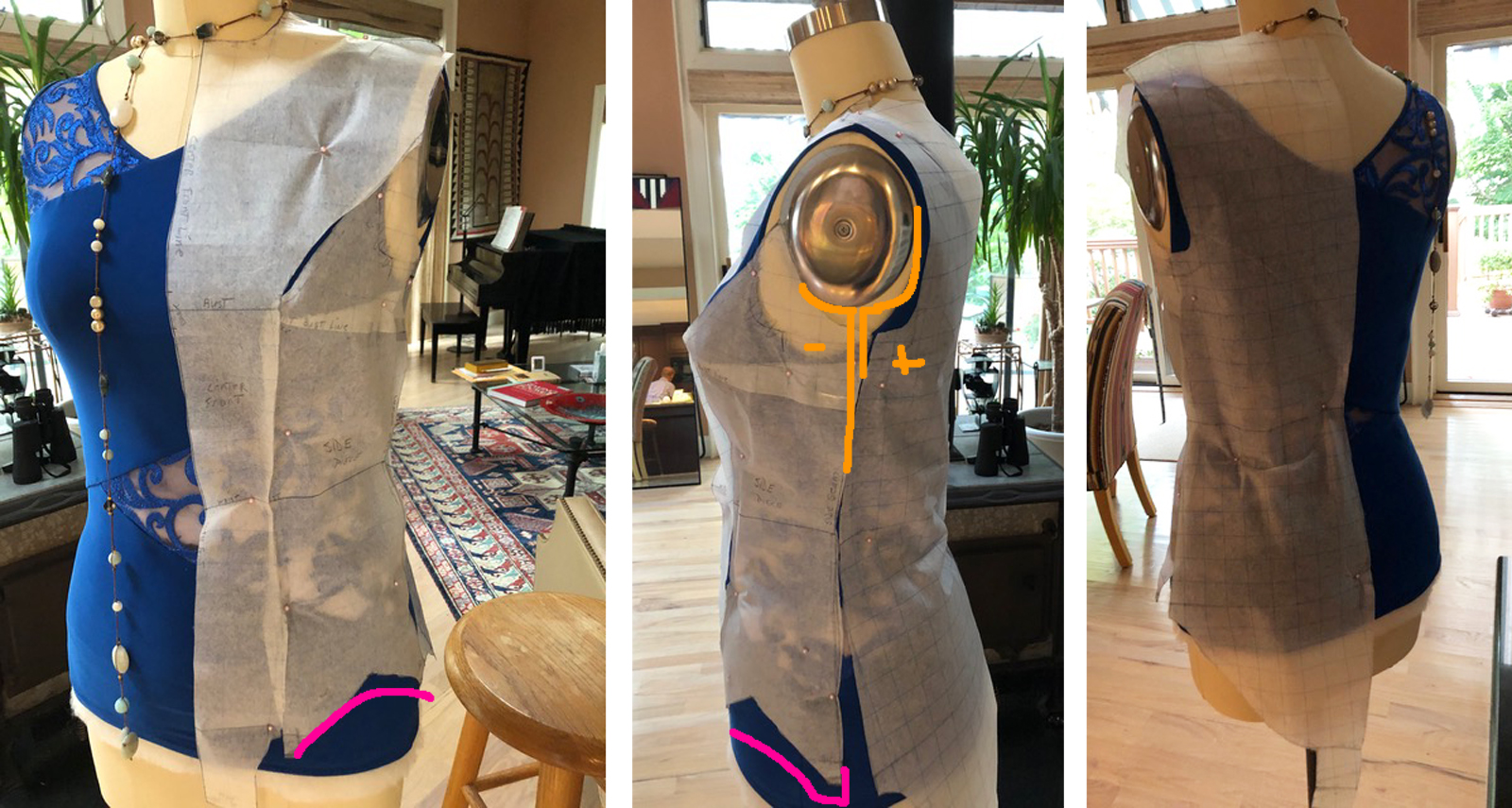
I finished the paper pattern for the bodice but am not sure on the neckline and leg holes so I decided to pin the paper to my dress form to get an idea of where it may be off. I realize that the stretch fabric will act differently but before I cut any fabric thought I would ask you to take a look. I am including 3 photos of the paper on the dress form. The form has a blue top on it so that the paper pattern can be seen seen somewhat easier. Thanks for your input.
(2:01:39-2:08:33)
T's answer:
I am hesitant to tell you to change anything on your pattern. Paper on a dress form will look much, much different than a fabric leotard fits your body. The bust seems to fit fine. Maybe straighten the side seam a little. For sure raise the back armhole. However, any changes I tell you to make may not be needed on a fabric leotard.
My truest advice is to cut out a leotard, then send me pics.
When I chatted with Vivienne just before this Q, she chuckled, "I didn't think the leotard pattern would work but it does." ... Go for it, Donna! Cut out a leotard. Use scrap lycra if you feel most comfortable doing that instead of your dress lycra.
(2:08:33-2:11:43) Conversation about mesh and how it is difficult to tell how stretchy and supportive each fabric is.
SARAH W.
I made a new leotard pattern and leotard. It turned out a little tight.
(2:11:43-2:17:30)
T's answer:
It doesn't look too tight. I would actually take it in more in the back. You will need to redo the zipper too.
JULIE C.
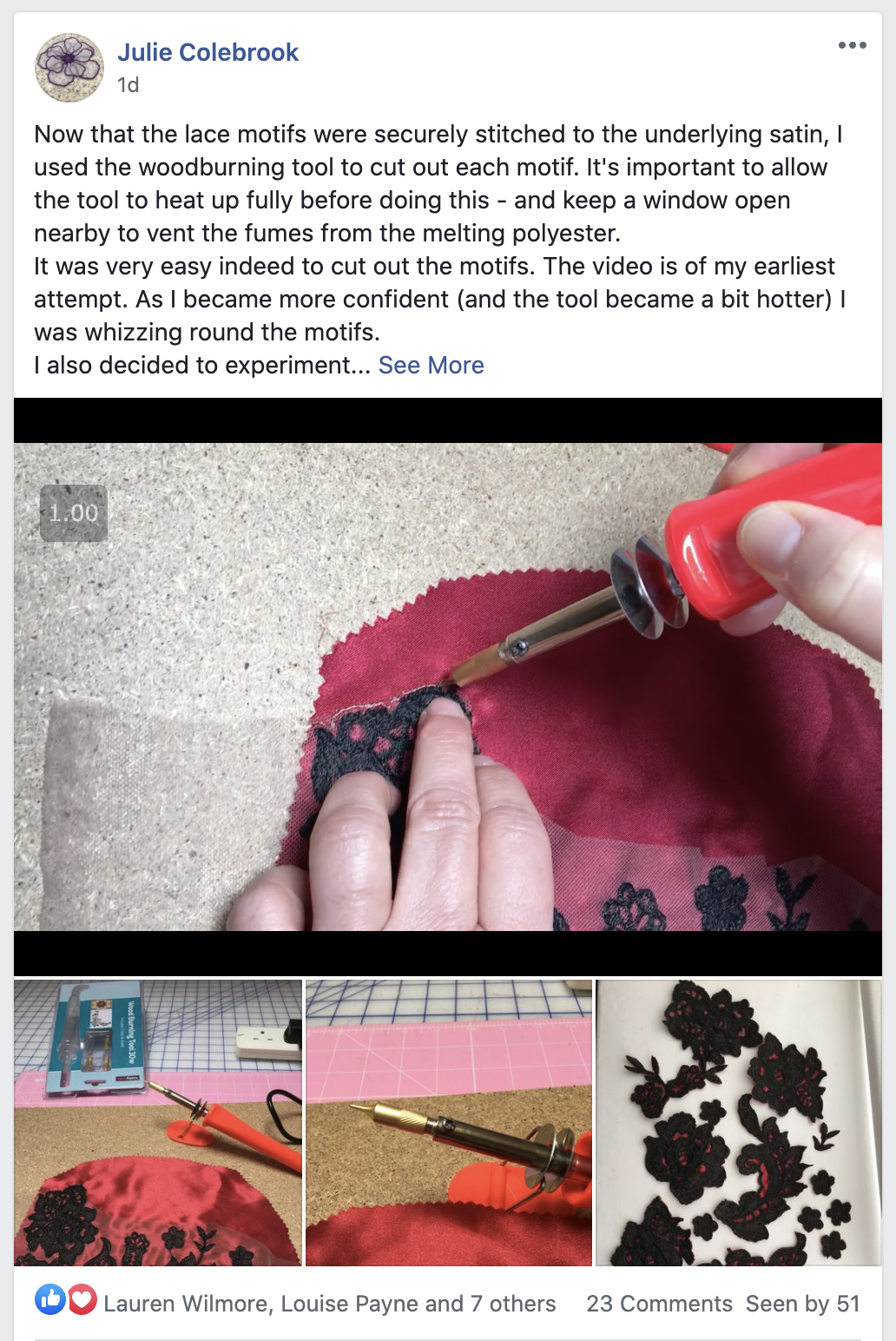
I'm about to cut out the lace motifs for my new dress, and I've never done that before. I have a wood-burning tool to cut the motifs. I'm not sure how to attach the satin to the underneath of the lace appliques though.
(2:17:33-2:31:40)
T's answer:
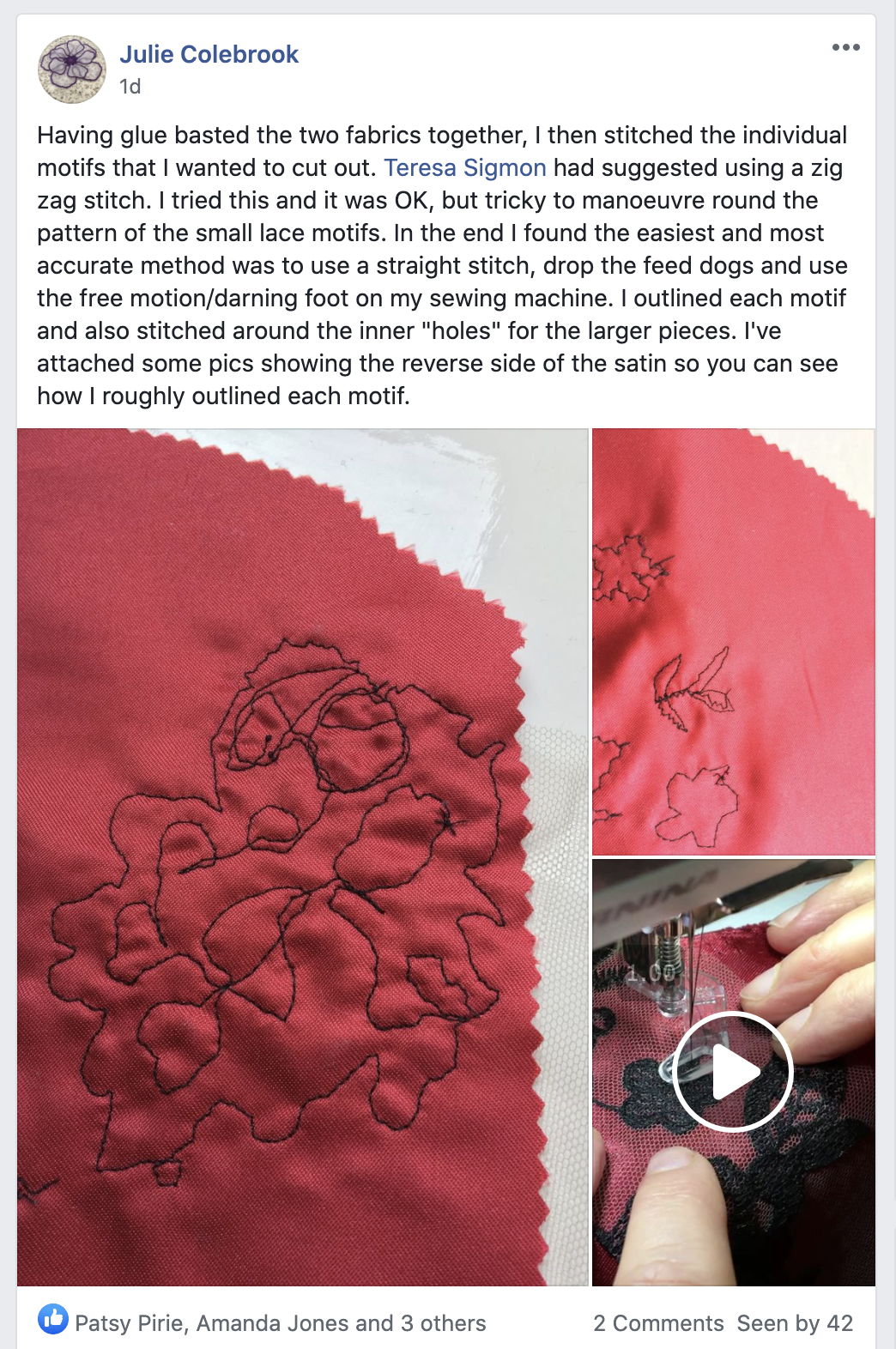
You could use Stitch Witchery fusible interfacing to attach the two layers. Or you could line the two fabrics up and just do a few rows of a small zig-zag stitch, which would be hard to see. You can roughly follow the curves with the stitches. You should stitch the fabrics first, then cut the appliqués with the wood-burning tool.
Patsy's suggestion for Julie:
Use a glue stick to stick the two fabrics together, then cut them out with the wood-burning tool. Then it will be easier to work with because you will have a smaller piece of fabric to stitch together.
We also talked about cutting out the lace designs.
After the Q&A call Julie posted about her techniques and success on Facebook:
SHARON S.
Sharon read about a new way to make godets in the Threads Magazine. She posted the info in the Facebook group.
(2:31:40-2:35:00)
.
Search here to find information throughout the entire member site as well as public blogs.